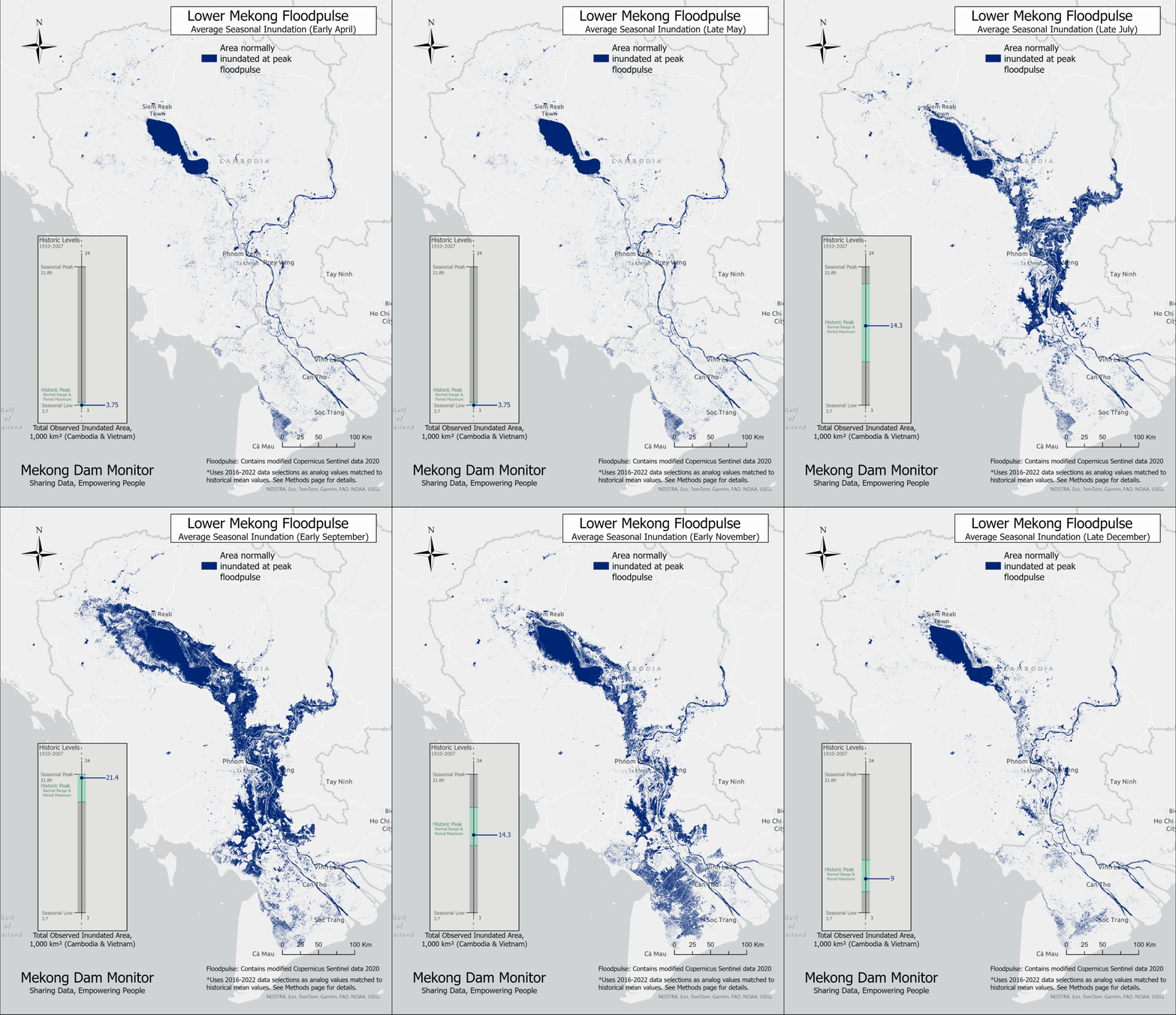
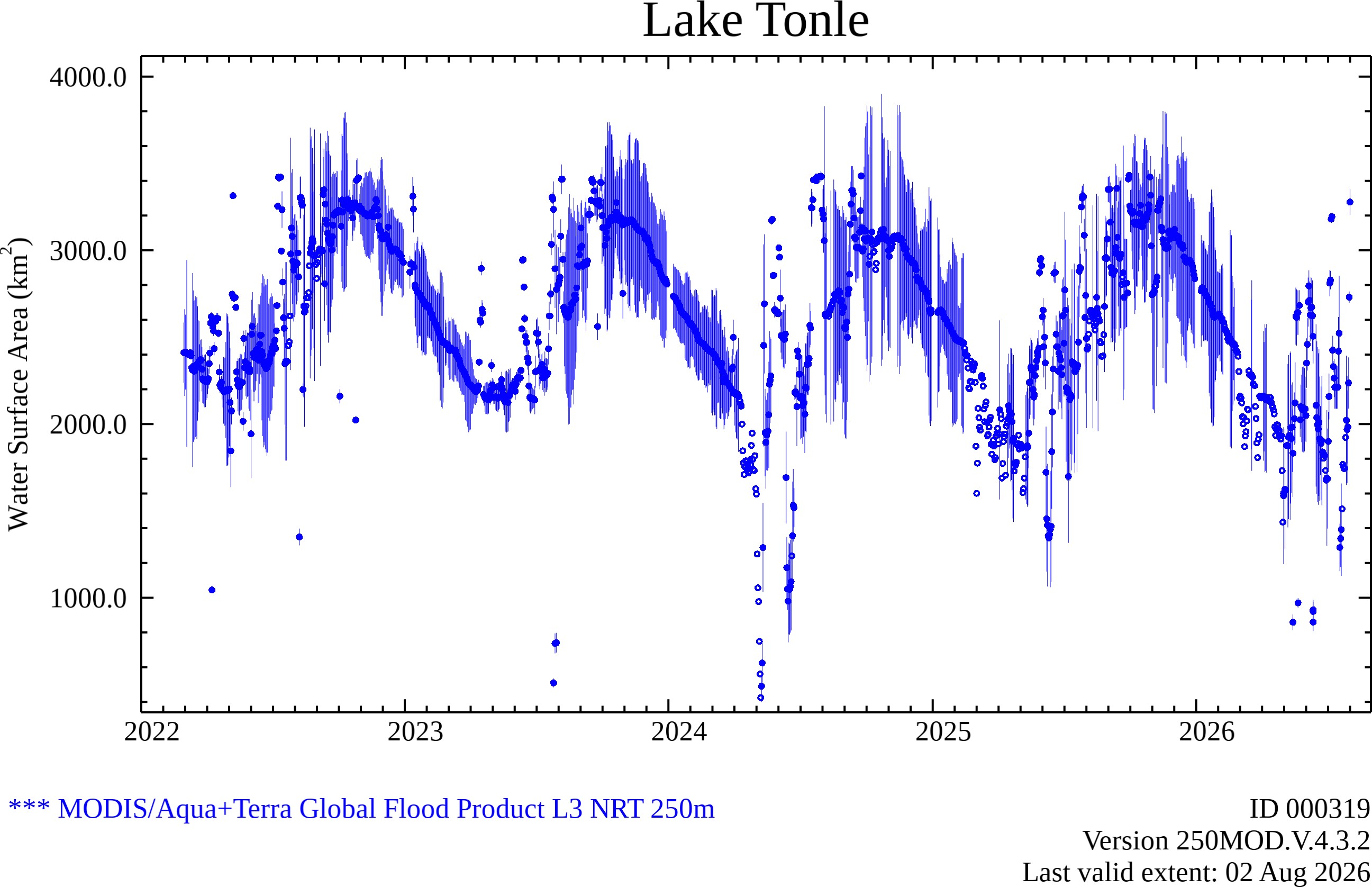
Tonlé Sap, located in Cambodia, is one of the most dynamic freshwater lakes in the world. Its size and depth vary dramatically between the dry and wet seasons. During the dry season (November to April), the lake covers only about 2,500–3,000 km² and has an average depth of around 1–2 meters. In the wet season (May to October), monsoon rains and upstream discharge cause the lake to expand to about 12,000–16,000 km², with depths reaching 8–10 meters. This means the lake can grow more than five times in area.
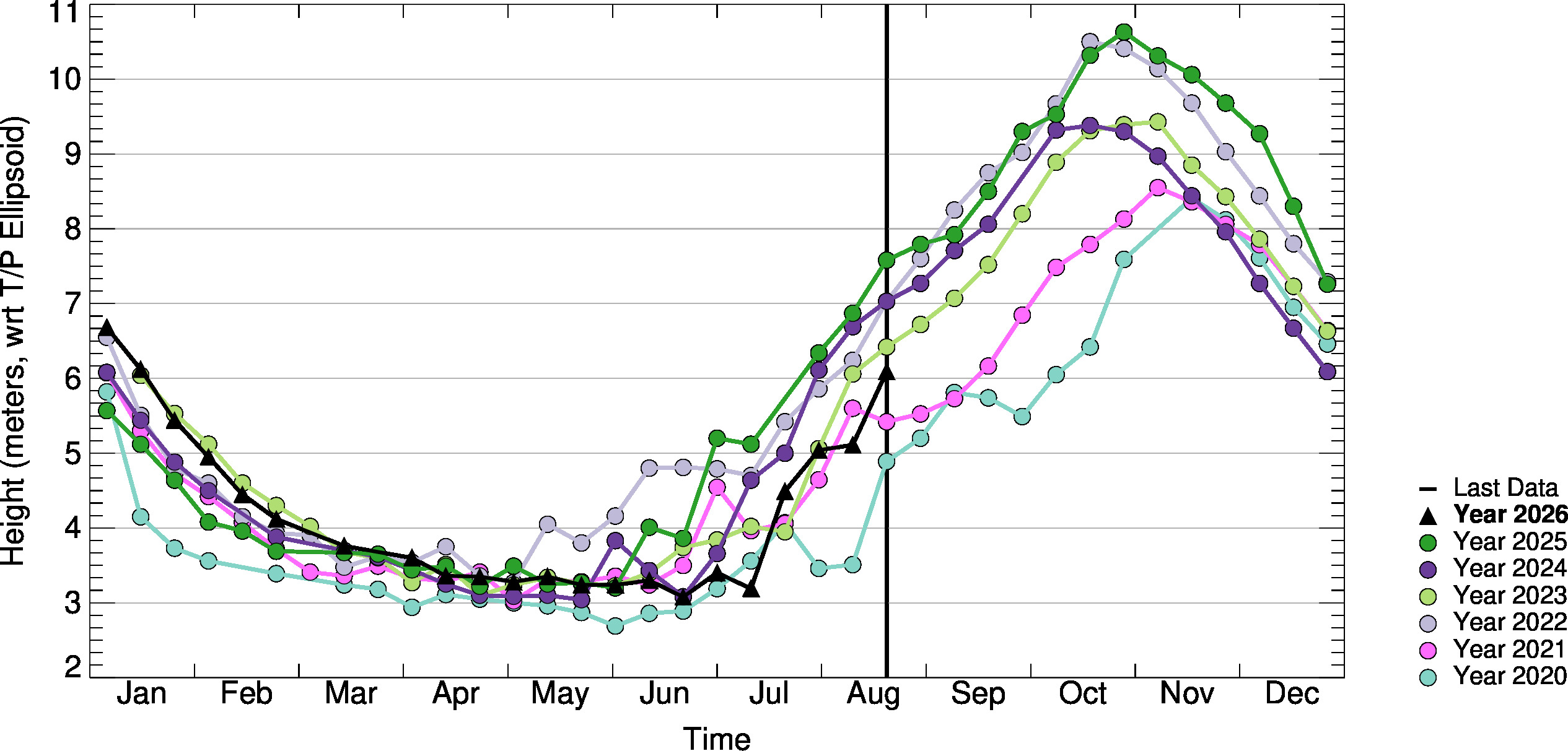
This extreme variation is caused by the unique flow reversal of the Tonlé Sap River, which connects the lake to the Mekong River near Phnom Penh. During the wet season, the Mekong carries enormous volumes of water from upstream regions. The high water level forces the Tonlé Sap River to reverse its flow direction, pushing water into the lake and causing it to expand. In the dry season, when the Mekong’s level falls, the river reverses again and drains water from the lake back into the Mekong.
This natural flood-pulse system is essential for regional ecosystems, agriculture, and one of the world’s most productive inland fisheries.